
Wastewater
Primary Treatment
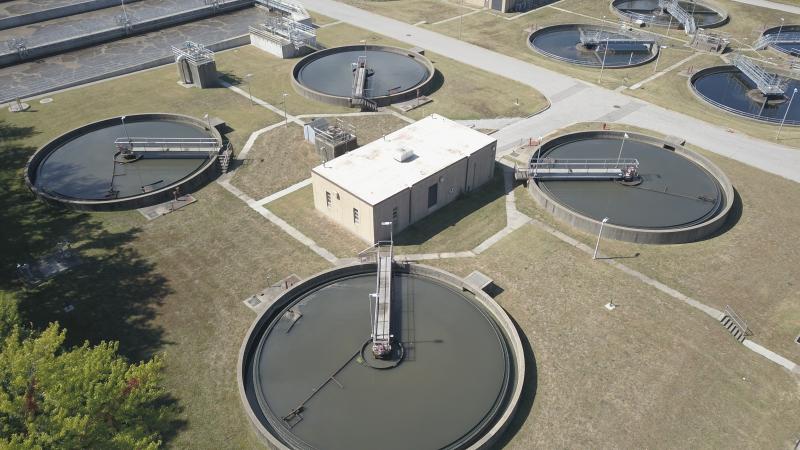
Primary Clarification
The first step of wastewater treatment consists of primary clarification utilizing four 60-foot diameter basins. Designed for a two-hour detention time, these clarifiers serve to settle out the larger solids. The settled solids are called primary sludge (bio-solids) which is pumped from the bottom of the clarifiers for further processing.
The primary clarifier effluent flows to four 64-foot square aeration basins. This stage is the complete mix activated sludge process that mixes and provides oxygen to the wastewater to optimize the growth of bacteria and other organisms for the biological treatment of the waste. The basins are designed to provide four to six hours detention time.
The activated sludge then flows to four 65-foot diameter secondary clarifiers. These clarifiers are designed for a two- to three-hour detention time and provide the final settling of activated sludge solids in order to achieve liquids - solids separation.
Secondary Treatment
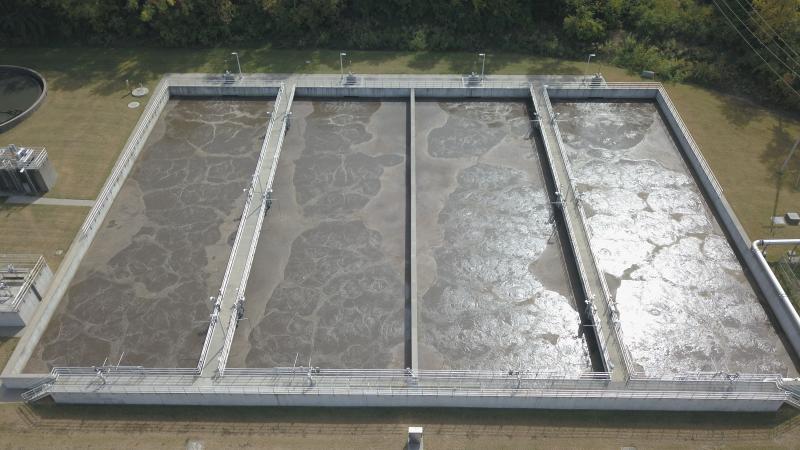
Aeration Basins
The primary clarifier effluent flows to four 64-foot square aeration basins. This stage is the complete mix activated sludge process that mixes and provides oxygen to the wastewater to optimize the growth of bacteria and other organisms for the biological treatment of the waste. The basins are designed to provide four to six hours detention time.
The activated sludge then flows to four 65-foot diameter secondary clarifiers. These clarifiers are designed for a two- to three-hour detention time and provide the final settling of activated sludge solids in order to achieve liquids - solids separation.
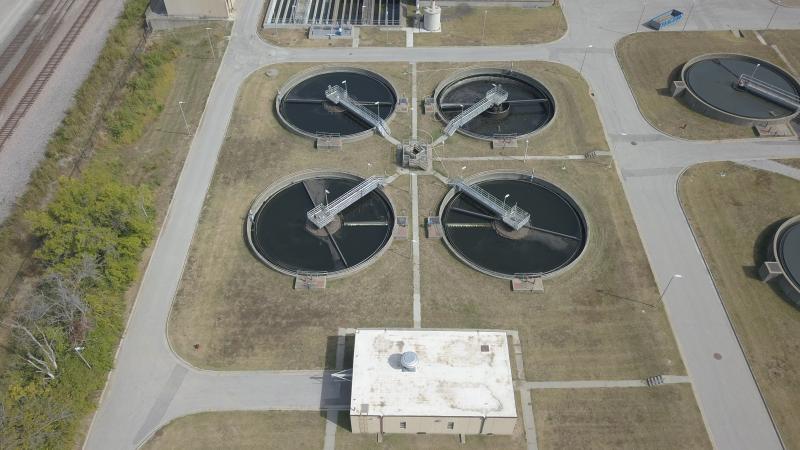
Secondary Clarification
A portion of these settled solids (activated sludge) is returned to the aeration basins to maintain optimum biological growth and conditions. Excess activated sludge is pumped to additional solids processes.
Secondary clarifier effluent has now achieved over 90% removal of suspended solids and biochemical oxygen demand, and is then discharged to Rock Creek, a tributary to the Missouri River.
Solids Processing and Disposal
The sludges (bio-solids) removed from the wastewater must now be de-watered and conditioned for final disposal. Sludges from the primary clarifiers are sent through cyclone degritting and a gravity thickener. The primary sludge is delivered at .5% solid slurry through cyclone degritting and thickener which converts the solids to 8 to 12% settled thickened sludge. To secure the thickening process, a mild dose of sodium hypochlorite is applied.
The secondary sludges (waste activated sludge) are sent to dissolved air flotation units of process. This waste activated sludge of .8 to 1.5% solids is now injected with air and polymer which thickens the sludge to 4%.
The gravity thickened (primary sludge) and flotation thickened waste activated sludge are delivered to a mixing/blending tank. Mixing and blending are accomplished with air diffusers. The blended sludges are now pumped through grinders and conditioned further in a low pressure wet air oxidation unit (thermal conditioning).
Wet Air Oxidation
Wet Air Oxidation is designed to receive a 5% blended primary and secondary sludge mixture. The system is also designed to condition 3,200 gallons per hour. The process utilizes a high pressure bag pump which operates at approximately 450 psig. The pump sends sludge through two sludge-to-sludge heat exchangers and a 30-inch diameter by 30-foot high reactor.
A high pressure air compressor injects air into the sludge flow at the entrance of the first heat exchanger inflow pipe. A steam generator operating at 400 psig sends hot steam into the reactor. The reactor operates at 385° F for 30 minutes at a pressure range of 310 psig.
The heated sludge is then delivered to a decant basin which allows the 5% oxidized sludge to settle to a 12 to 15% solids content. The water overflow at the decant basin, along with gravity thickener overflows are sent back to the aeration basin for further wastewater treatment.
Gravity Belt Filter Press
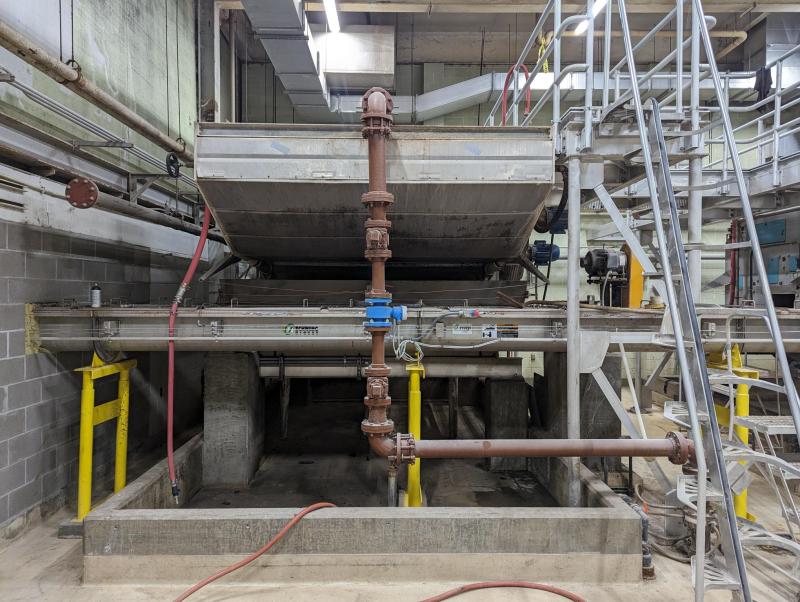
Thickened, oxidized sludge is pumped to gravity belt presses where the slurried sludge is spread between woven cloth belts that travel through a series of large rollers that successively squeeze the remaining water from the sludge. The resulting sludge "cake" rolls off the press in a sheet of solid sludge that is dry enough to easily incinerate.
Fluidized Bed Incinerator
The sludge cake is screw augered into a fluidized bed incinerator that contains a bed of fine sand suspended by constant air injection and incinerated at a temperature of 1100°F. The sludge typically contains enough volatile organic matter that it self sustains the burning process without the addition of fuel oil. Incineration reduces the sludge volume as much as 90% and results in a fine ash that flows through the exhaust of the incinerator where it is converted to an ash slurry when washed down in a three tray scrubber. The scrubbed, hot air is continuously monitored for air quality prior to the stack exhaust and the washed down ash is pumped to an ash press similar to the sludge presses. The ash is processed into a dry product that is conveyed to dump trucks for final disposal at the landfill.